


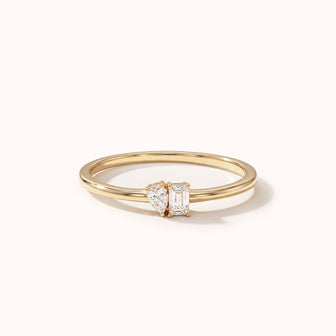
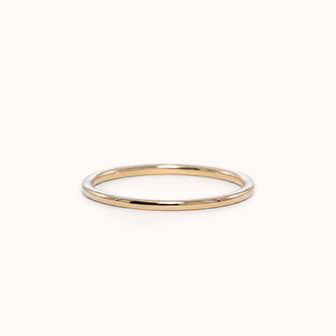
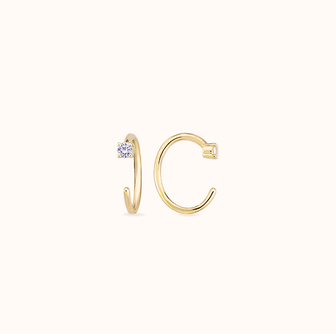
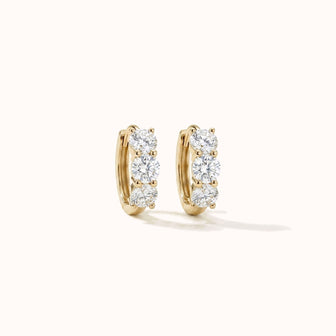
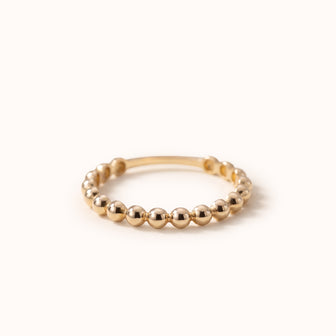
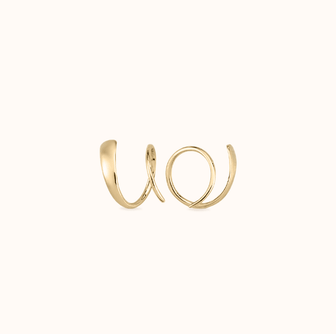
Meet your gold.No wrong answers.
Three golds — just the right one for you. Here’s how to choose.

Almost no jewelry is pure gold. 24k is beautiful but soft enough to bend with your hands, so jewelers mix it with stronger metals — and that mix is measured in karats.
The blending isn’t a shortcut, it’s the point: it’s what makes gold strong enough to wear every day.
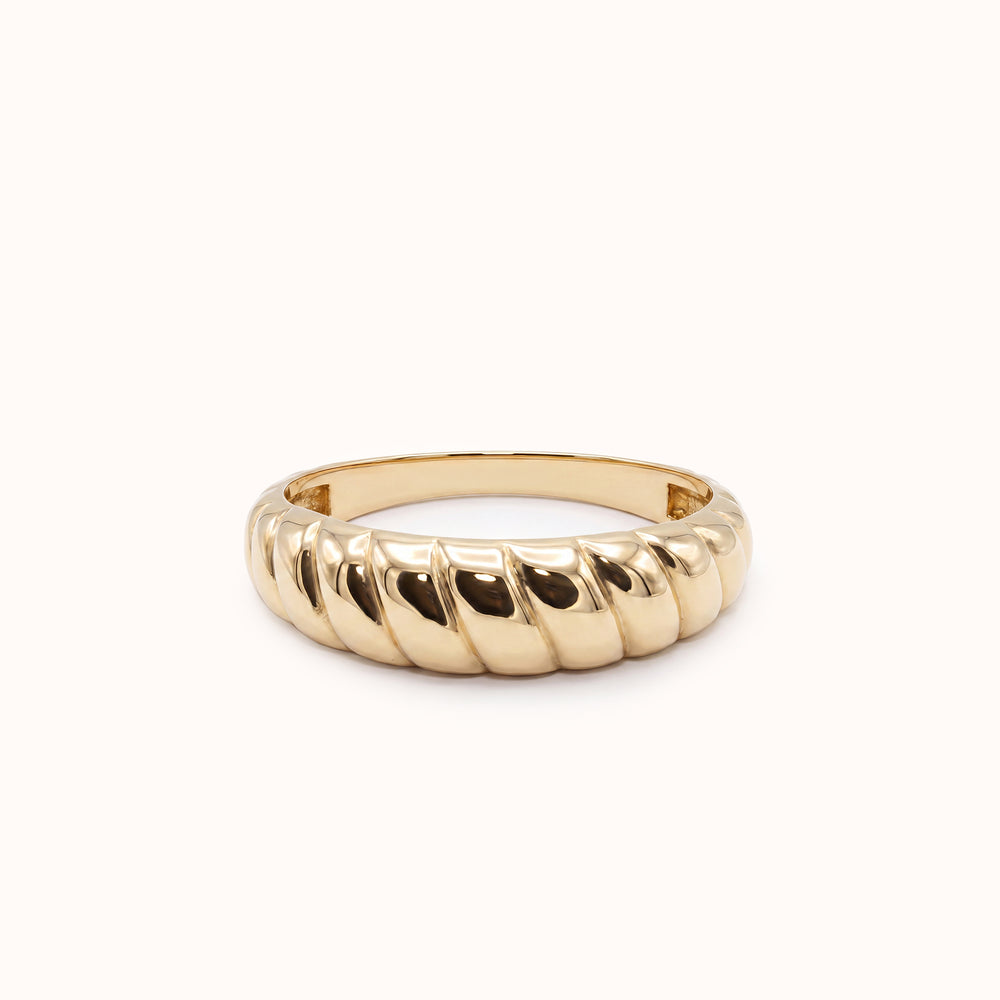
14k Solid Gold
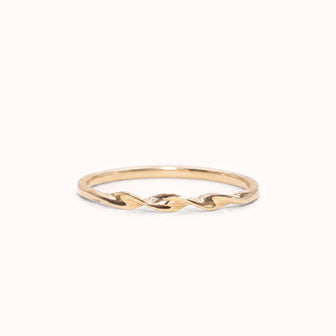
The fine-jewelry standard. A rich, warm color that never tarnishes, fades, or asks for much.
The full story ↓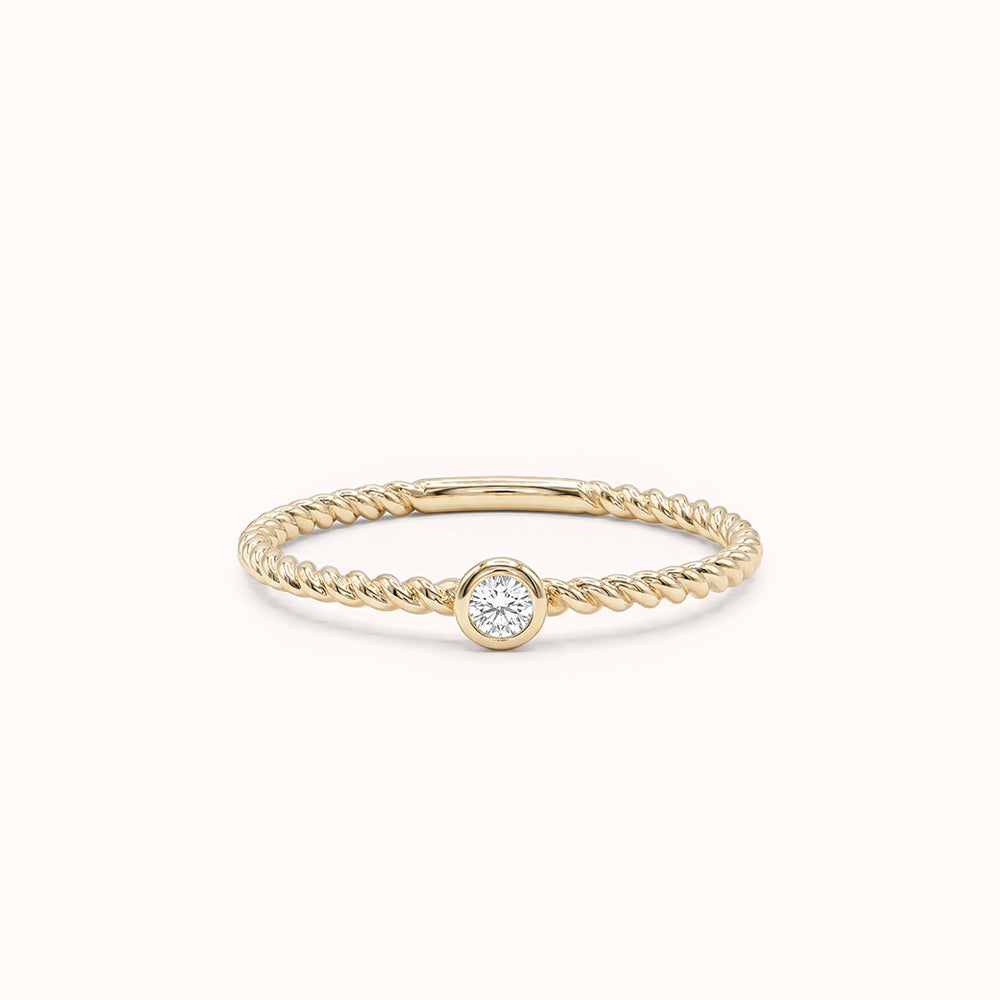
10k Solid Gold
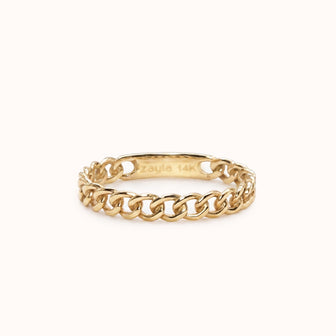
Still real, solid gold — noticeably harder than 14k, in a slightly paler champagne tone.
The full story ↓
18k Gold Vermeil
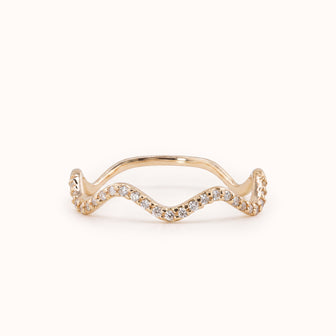
A thick layer of 18k gold — the richest tone of the three — bonded over solid sterling silver. And it can be replated, easily.
The full story ↓The live price of the gold itself — this is the metal you’re wearing.
Prices update daily from the same live feed behind the gold-value card on our product pages. Shown per gram of solid gold at each purity.
For scale: one gram of gold is about the weight of a paperclip — a nickel weighs five.
Side by side.

The forever default.
When people picture fine jewelry, they’re picturing 14k: the standard for engagement rings, heirlooms, and the pieces that never come off. It’s solid gold through and through — no layers, no fading, nothing to wear away. Warm color, effortless upkeep, and it holds its value the way only gold does.
Investment pieces you’ll wear daily, forever. If budget allows, 14k is never the wrong answer.
Gold scratches — and that’s fine. Solid gold buffs right back to new, so a scratch is never permanent. Send it in anytime and it comes back like day one.
The workhorse.
Still real, solid gold — just built with more muscle. At 41.7% pure, 10k is noticeably harder than 14k, in a slightly paler champagne gold. That extra strength is why we chose it for pieces like the Tapered Bold Huggies and the Dainty Chain Ring — thin, delicate shapes that need to stand up to real life.
Dainty stacking pieces that shouldn’t bend, daily rings for anyone hard on their hands, and larger gold pieces you want forever at a softer price.
10k holds its value exactly the way 14k does. A piece’s gold value comes from how much pure gold it contains — and that percentage never changes. It’s solid, meltable, recyclable gold, whether the karat says 10 or 14.


All the diamond, less of the gold market.
Vermeil is a regulated standard with two requirements: solid sterling silver underneath, and a thick layer of real gold on top — at least 2.5 microns. Ours is 2.5 microns of 18k, the richest, deepest gold tone we make. This is not the one-splash-and-it’s-done kind.
It’s also how we keep real diamonds at real-life prices. Lab-grown diamonds have become dramatically more affordable; gold hasn’t. Set in 14k, the Full Circle Eternity Band would cost at least three times as much — same diamonds, same sparkle.
Ordinary plating is a flash of gold — often a tenth as thick — over brass or mystery metal. Vermeil’s thickness and sterling core are what make it jewelry, not costume.
If the gold layer thins after years of wear, we replate it — a quick re-dip and polish ($20–$75 including shipping) and it’s back to brand new. Old favorite, new shine.
Why gold holds its value.
Gold’s price isn’t jewelry-industry theater — it comes from what gold is.
Per gram of 14k, ten years apart. We’re jewelers, not financial advisors — but the chemistry speaks for itself.
Gold isn’t made on this planet — it’s forged when stars collide. Astronomers watched it happen in 2017, when two colliding neutron stars produced gold detectable from 130 million light-years away. The gold in your ring is, literally, stardust older than the world.
Egyptians buried their kings in it. Romans minted their highest coin from it. The Inca called it the sweat of the sun. Cultures that never met all reached the same conclusion — which is why gold became the one true global currency, and why central banks still hold it today.
Gold never tarnishes or corrodes, conducts electricity brilliantly, and is safe inside the human body. It’s in your phone, in satellites, in dental work and medical implants. Demand isn’t just necklaces — it’s technology and medicine.
All the gold ever mined would fit in a cube about 22 meters on a side — and what’s left gets harder to reach every year.
How we'd choose
Go 14k when…
- It’s an investment piece you’ll wear daily, forever
- The budget allows — the gold holds its value, and so does the piece
Go 10k when…
- The piece is thin or dainty and needs extra strength to hold its shape
- It’s a daily ring for hard-working hands
- You want a larger solid-gold piece for good — at a price that leaves room for the fun stuff
Go vermeil when…
- The design simply takes a lot of metal — tennis necklaces and diamond-lined bands would be out of reach in solid gold
- The piece is fashion-forward: something you’ll love for years but want to buy a little more freely

Every piece gets a second act.
Our Jewelry Spa Day covers all three golds.
We buff out scratches and dents, re-shape bent bands, check and tighten prongs, re-size rings, and shorten or lengthen chains. Your piece comes back literally new — from $15 plus shipping, 2–3 weeks door to door.
A fresh re-dip in 18k gold plus a full polish — $20–$75 including shipping, about 4 weeks.